

In this article.
- What People Assume Makes Therapy Effective
- What Actually Determines Whether Hypnotherapy Works
- Is Online Hypnotherapy as Effective as In-Person Therapy?
- Online Hypnotherapy vs In-Person Hypnotherapy
- The Role of Safety and the Nervous System
- Focus and Absorption: Why Hypnosis Works Online
- Consistency and Momentum Matter More Than Location
- Real-World Integration: Where Change Actually Happens
- When In-Person Hypnotherapy May Be Preferable
- Online Hypnotherapy Is Not a Compromise
- How This Fits Into Online Hypnotherapy as a Whole
- Considering Online Hypnotherapy?
- Frequently Asked Questions: Online vs In-Person Hypnotherapy
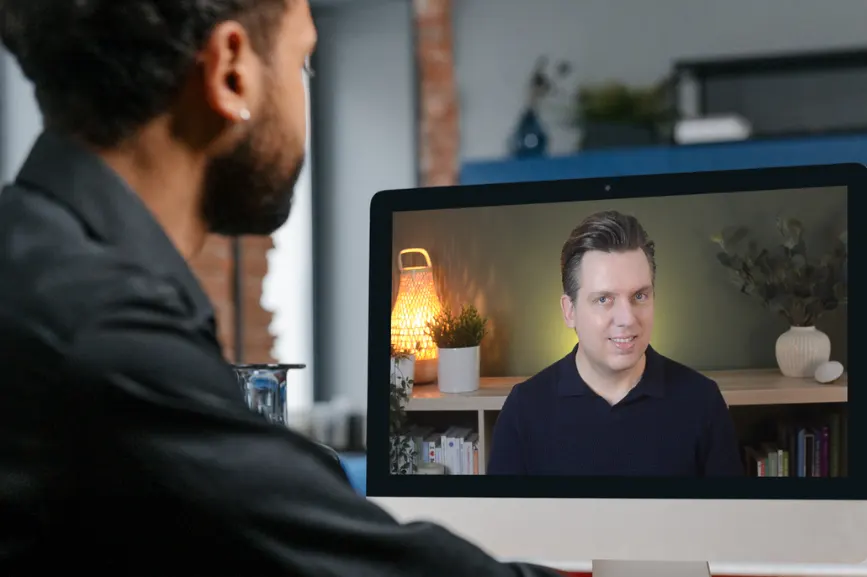
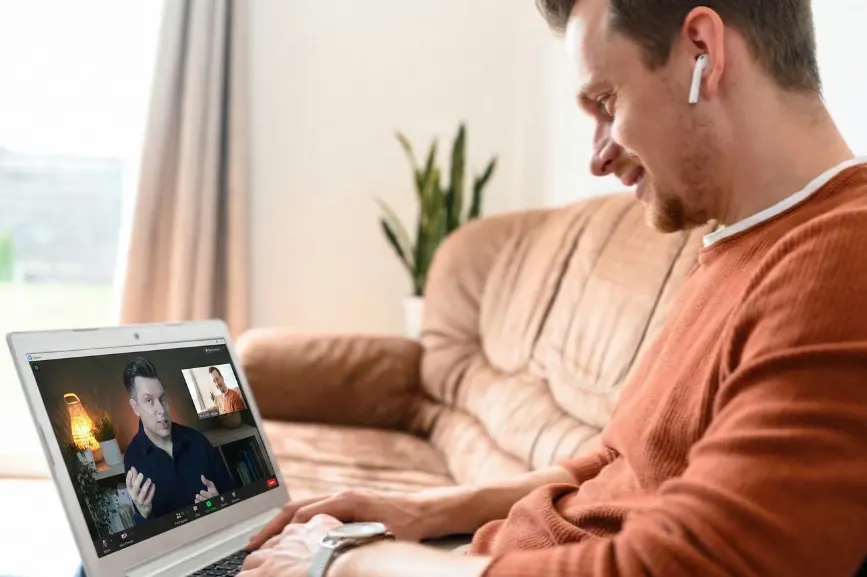
When people consider hypnotherapy, one of the most common and understandable questions they ask is whether it’s better to work online or in person.
If you’re already dealing with anxiety, stress, overthinking, or sleep problems, this question often carries more weight than it first appears. You’re not just choosing a format, you’re trying to choose the option that feels safest, most effective, and least likely to make things worse.
I’m Andrew Major, a clinical hypnotherapist and psychotherapist, and I’ve worked extensively with clients both online and in person. What I’ve learned through years of clinical practice is that the assumptions people make about therapy effectiveness rarely match what actually creates change.
This article is designed to help you understand what genuinely matters, so you can make a grounded, confident decision about whether to choose online or in-person therapy.
What People Assume Makes Therapy Effective
When people compare online hypnotherapy with in-person sessions, they often focus on what feels familiar or reassuring rather than what is therapeutically important.
Common assumptions include:
- Being physically in the same room creates a stronger therapeutic effect
- A traditional therapy space is inherently more powerful than home
- Hypnosis requires physical presence to work properly
- Online sessions may feel less real, less immersive, or less personal
These assumptions make sense. They’re shaped by how therapy has historically been presented and portrayed.
However, none of these factors reliably predict whether someone will feel calmer, sleep better, or respond differently to anxiety in daily life.
What Actually Determines Whether Hypnotherapy Works
From both clinical experience and psychological research, certain factors consistently determine whether hypnotherapy is effective, regardless of whether it’s delivered online or in person.
These include:
- Feeling emotionally safe and understood
- Trust in the therapist and the therapeutic process
- The ability to focus attention without pressure
- Emotional regulation during and after sessions
- Consistency and reinforcement over time
- Integration of changes into everyday life
When these conditions are present, hypnotherapy tends to work well. When they’re missing, the format alone won’t compensate.
In other words, effectiveness comes from how the work is done, not where it happens.
Is Online Hypnotherapy as Effective as In-Person Therapy?
One of the most common questions people ask is whether therapy delivered online is as effective as working face-to-face.
Research into online psychological therapy has grown significantly over the past two decades, particularly for anxiety-related conditions.
For example, a large systematic review and meta-analysis comparing internet-based cognitive behavioural therapy with face-to-face therapy analysed 20 studies involving 1,418 participants and found equivalent overall treatment effects between the two approaches.
More recent reviews have continued to support this conclusion, showing that therapist-guided online therapy can achieve outcomes comparable to traditional in-person therapy, particularly for anxiety- and stress-related difficulties.
These findings support what many therapists observe in practice: the effectiveness of therapy depends far more on the therapeutic process and the client’s engagement than on physical location.
Online Hypnotherapy vs In-Person Hypnotherapy
While the core psychological processes are the same, there are practical differences between the two formats.
| Aspect | Online Hypnotherapy | In-Person Hypnotherapy |
|---|---|---|
| Environment | Conducted in your own familiar surroundings, often helping the nervous system settle more quickly | Takes place in a therapist’s office or clinic |
| Accessibility | No travel required, making sessions easier to attend consistently | Travel time and scheduling may create barriers |
| Comfort | Many people feel more relaxed in their own environment | Some clients prefer the structure of a dedicated therapy space |
| Consistency | Easier to maintain regular sessions, which supports the brain’s learning process | Missed sessions may occur due to logistics or travel |
| Real-world integration | Skills are practised in the same environment where challenges usually occur | Skills learned in the clinic must later transfer into everyday life |
| Effectiveness | Research shows outcomes comparable to in-person therapy for many anxiety-related conditions | Long-established and widely practised |
In practice, the effectiveness of hypnotherapy depends far more on the therapist’s training, the structure of the sessions, and the client’s participation than on whether the work takes place online or in person.
The Role of Safety and the Nervous System
Most people who seek hypnotherapy are not starting from a neutral nervous system. Anxiety, chronic stress, and overthinking are all signs that the brain is spending too much time in a state of alert.
For therapeutic change to occur, the nervous system needs to feel safe enough to soften its defences.
For many people, being at home naturally supports this. Familiar surroundings reduce unconscious threat signals, allowing breathing to slow and attention to settle more easily.
By contrast, travelling to an unfamiliar environment, navigating traffic, or sitting in a waiting room can quietly activate the very stress response therapy is meant to ease.
This doesn’t mean in-person therapy is ineffective, but it does explain why online hypnotherapy can be particularly well suited to anxiety-related difficulties.
Focus and Absorption: Why Hypnosis Works Online
Hypnosis is not something that happens to you. It’s a state of focused attention that you actively participate in. If you’d like a fuller explanation of what that looks like in practice, you can read this guide to what happens in an online hypnotherapy session.
This state depends on:
- Willing engagement
- A sense of comfort and ease
- Reduced self-consciousness
- Minimal pressure to “perform”
For many people, these conditions are easier to access at home. There is often less concern about being watched, judged, or “doing it right”.
Online sessions can feel more natural and less performative, which paradoxically allows deeper focus to emerge.
In clinical practice, it’s common for people to say they were surprised by how immersive online hypnosis felt, precisely because it happened in a familiar, low-pressure environment.
Consistency and Momentum Matter More Than Location
Hypnotherapy is not a one-off intervention. The brain changes through repetition, reinforcement, and experience over time.
Consistency matters.
Online hypnotherapy reduces many of the practical obstacles that disrupt momentum, including:
- Travel time and fatigue
- Scheduling difficulties around work or family
- Missed sessions due to logistics
When sessions are easier to attend, they tend to happen more regularly, and that regularity supports learning, emotional regulation, and confidence.
From a therapeutic perspective, consistency often matters more than location.
Real-World Integration: Where Change Actually Happens
One of the most overlooked aspects of therapy is where change is rehearsed and reinforced.
Lasting change doesn’t happen solely within sessions. It happens when your mind responds differently during everyday moments, at home, at work, or in social situations.
Online hypnotherapy naturally supports this integration. The work takes place in the same environment where difficulties usually arise.
This makes it easier to:
- Apply new responses immediately
- Notice subtle improvements as they happen
- Build confidence through real-world feedback
Rather than transferring calm from a therapy room into daily life, the learning occurs in context.
When In-Person Hypnotherapy May Be Preferable
Ethical therapy means being honest about suitability.
In-person hypnotherapy may feel more appropriate if:
- You don’t have access to a private or uninterrupted space
- You feel more grounded with physical presence
- You strongly prefer face-to-face interaction
A skilled therapist will always help you choose the format that feels most supportive rather than pushing a particular model.
Online Hypnotherapy Is Not a Compromise
One of the most important things to understand is that online hypnotherapy is not a lesser version of in-person work.
When delivered by a clinically trained therapist, using a clear structure and collaborative approach, online hypnotherapy can be just as effective, and in many cases more effective than face-to-face sessions.
What creates change is not physical proximity, but safety, focus, repetition, and real-world application.
How This Fits Into Online Hypnotherapy as a Whole
If you’d like a full explanation of how online hypnotherapy works, what to expect from sessions, and how to choose the right therapist, you can read my in-depth guide here: Online Hypnotherapy: How It Works, What It Helps With, and Why It’s Effective.
Considering Online Hypnotherapy?
If you’re considering online hypnotherapy and would like to explore whether this approach feels right for you, the first step is an initial consultation.
This session is designed to help you understand why you’ve been feeling the way you do, explore what you would like to be different, and decide together whether ongoing work would be beneficial.
There’s no pressure to continue; the consultation itself is intended to offer clarity and direction. You can learn more and book your session here:
Book Your Initial Consultation
Frequently Asked Questions: Online vs In-Person Hypnotherapy
Is online hypnotherapy as effective as in-person hypnotherapy?
Yes. When delivered by a clinically trained hypnotherapist using a clear therapeutic process, online hypnotherapy can be just as effective as in-person work. Effectiveness depends more on safety, focus, consistency, and real-world integration than on physical location.
Does hypnosis work differently online compared to face-to-face?
No. Hypnosis is a mental state of focused attention, not a physical process. As long as you can focus, feel comfortable, and engage with the session, hypnosis works in the same way online as it does in person.
Why do some people prefer online hypnotherapy?
Many people find online hypnotherapy easier because they’re in a familiar environment. This can help the nervous system feel safer, reduce self-consciousness, and make it easier to relax and focus - particularly for anxiety or overthinking.
Is in-person hypnotherapy better for more serious issues?
Not necessarily. Online hypnotherapy can be very effective for anxiety, stress, sleep problems, confidence, and habit change. What matters most is the therapist’s training, the therapeutic approach, and how well the work is integrated into daily life.
Are there situations where in-person hypnotherapy is a better option?
Yes. In-person hypnotherapy may be preferable if you don’t have access to a private space at home, feel more grounded with physical presence, or strongly prefer face-to-face interaction. A good therapist will help you choose what feels most supportive.
Can online hypnotherapy feel as immersive as in-person sessions?
For many people, yes - and sometimes more so. Being at home often reduces pressure and self-awareness, which can allow deeper focus and absorption during hypnosis.
Does working online affect the therapeutic relationship?
No. A strong therapeutic relationship can be built online just as effectively as in person. Feeling heard, understood, and supported matters far more than physical proximity.
Is online hypnotherapy suitable for anxiety and overthinking?
Yes. Online hypnotherapy is often particularly well suited to anxiety-related difficulties because it reduces environmental stressors and supports practising calm responses in real-life settings.
What matters more: the format or the therapist?
The therapist and their approach matter far more than the format. A well-trained therapist working online will usually be more effective than poorly structured in-person sessions.
Where can I learn more about how online hypnotherapy works overall?
You can read a full, clinical explanation here: Online Hypnotherapy: How It Works, What It Helps With, and Why It’s Effective.