

In this article.
- What Is Online Hypnotherapy?
- How Online Hypnotherapy Actually Works
- Why Online Hypnotherapy Can Be As Effective, or More Effective, Than In-Person
- Who Online Hypnotherapy Works Best For
- When Online Hypnotherapy Might Not Be the Right Fit
- What Actually Makes Online Hypnotherapy Effective
- Is There Evidence That Online Therapy Works?
- How to Choose the Right Online Hypnotherapist
- Working With Andrew Major Online
- Hypnotherapy Fees, Value, and Investment
- How Quickly Does Online Hypnotherapy Work?
- Considering Online Hypnotherapy?
- Frequently Asked Questions
Online hypnotherapy is a structured form of talking therapy combined with hypnosis, delivered via secure video sessions to help reduce anxiety, improve sleep, and build confidence.
Online hypnotherapy is no longer a new or experimental option. For many people, it has become one of the most effective, practical, and accessible ways to work with anxiety, stress, sleep problems, confidence issues, and overthinking.
I’m Andrew Major, a clinical hypnotherapist and psychotherapist with several years’ experience working with clients both in person and online. During that time, I’ve seen first-hand how powerful online hypnotherapy can be when it’s delivered properly, with the right structure, therapeutic approach, and expectations.
In this article, I explain how online hypnotherapy actually works, who it’s most effective for, what makes it successful, and how to decide whether it’s the right approach for you.
What Is Online Hypnotherapy?
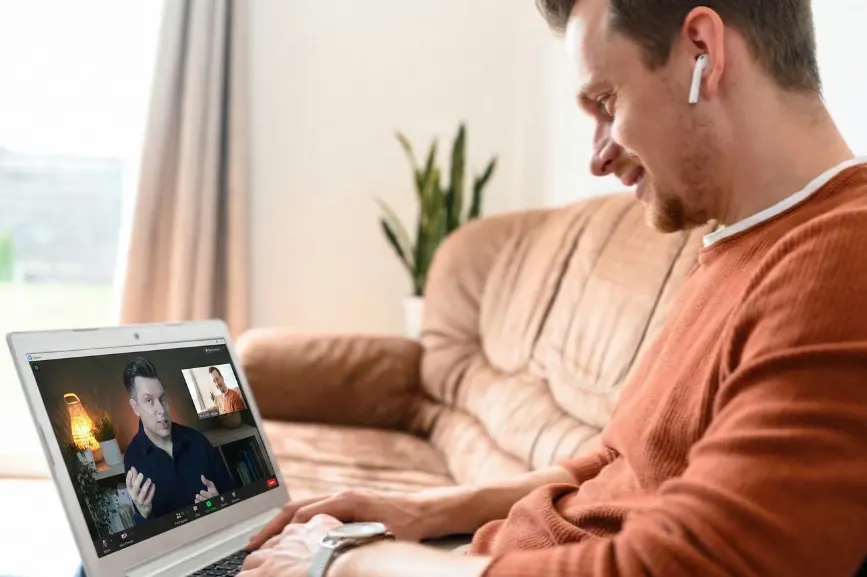
Online hypnotherapy is a form of psychological therapy that combines structured talking therapy with hypnosis, delivered securely via video call using secure platforms like Zoom. Sessions are live, interactive, confidential, and tailored to your needs. The therapeutic process is the same as with in-person hypnotherapy. The only difference is the setting; instead of sitting in a therapy room, you’re in your own familiar environment, and for many people that familiarity actually enhances the therapeutic process.
How Online Hypnotherapy Actually Works
One of the biggest misunderstandings about hypnotherapy, whether online or in-person, is the idea that change happens to you while you’re hypnotised. In effective hypnotherapy, change happens through you, with hypnosis acting as a catalyst that helps your mind learn new, calmer, more helpful responses.
Online hypnotherapy follows a clear, structured process. Knowing what to expect can often help you to feel calmer and more confident before you begin your session.
A typical online hypnotherapy session includes:
1. A Solution Focused Therapeutic Conversation
Each session begins with a focused, structured conversation. This is not an open-ended discussion of everything that’s gone wrong, or a deep analysis of the past.
Instead, this initial part of the session tends to focus on:
- What you want to be different
- How anxiety, stress, or overthinking is currently affecting you
- What small signs of progress would look like
- What’s already working, even slightly
This part of the session helps your nervous system settle and gently shifts your attention away from threat-based thinking. From a brain perspective, it reduces activation in stress-related networks and prepares the mind for learning something new.
This conversation is especially important online. It creates clarity, trust, and psychological safety, all of which make hypnosis more effective.
2. Preparing for Hypnosis (What This Feels Like)
Before hypnosis begins, you’ll be guided into a comfortable seated or reclined position. You don’t need to “try” to relax or empty your mind.
Most people notice:
- A slowing of breathing
- A sense of physical heaviness or lightness
- Thoughts becoming less urgent
- A feeling of calm focus
Nothing unusual or dramatic needs to happen. Hypnosis is simply a shift in attention, not sleep, unconsciousness, or loss of control.
3. Entering a Natural State of Focus (Hypnosis)
Hypnosis is a natural mental state that we all experience daily, for example, when daydreaming, driving on autopilot, or becoming absorbed in a film.
Online delivery does not interfere with this process. In fact, many people find it easier to enter this focused state at home, where their nervous system already feels safer.
During hypnosis:
- You remain aware of your surroundings
- You can hear and understand everything being said
- You can move or speak if needed
- You stay fully in control
The mind simply becomes more receptive to helpful ideas and imagery, while less focused on habitual anxious patterns.
4. Therapeutic Suggestions and Mental Rehearsal
Once this focused state is established, carefully structured therapeutic language is used to support change.
This may include:
- Metaphors that help the mind understand anxiety differently
- Imagery that promotes calm and emotional regulation
- Mental rehearsal of responding differently in real-life situations
- Suggestions that encourage confidence, clarity, and perspective
These suggestions are never about forcing change. They work by helping the brain experience new responses internally, so they feel more familiar and accessible outside of sessions.
5. Re-Orientation and Integration
At the end of hypnosis, you’re gently guided back to full alertness. Most people feel calm, clear-headed, and relaxed – not groggy or disorientated.
Time is often spent briefly reflecting on what stood out for you and how to carry the session’s insights into everyday life.
6. Reinforcing Change Between Sessions
Hypnotherapy is most effective when it supports small, practical changes between sessions. These might include:
- Responding differently to anxious thoughts
- Noticing moments of calm
- Sleeping more easily
- Feeling slightly more confident in situations that used to feel difficult
These shifts are how the brain learns that things can be different. Online hypnotherapy integrates naturally into this process, because the work is already happening in your real-world environment.
Why Online Hypnotherapy Can Be As Effective, or More Effective, Than In-Person
Many people assume therapy must be face-to-face to be effective. In practice, effectiveness depends far more on psychological safety, focus, and consistency than on physical location.
Online hypnotherapy offers several important advantages:
- Reduced threat response: Travelling to unfamiliar environments can activate the stress response. Being at home often allows the nervous system to settle more quickly.
- Greater emotional regulation: Familiar surroundings support relaxation and concentration, which are essential for hypnosis.
- Increased autonomy: Remaining in control of your space can be especially important for anxiety and confidence-related issues.
- Consistency and momentum: Fewer cancellations, less disruption, and easier scheduling support ongoing progress.
- Better real-world integration: Changes are practised where daily life actually happens, helping new responses generalise more effectively.
For anxiety, overthinking, and stress-related difficulties, these factors can significantly enhance outcomes.
Who Online Hypnotherapy Works Best For
Online hypnotherapy is particularly effective for people experiencing:
- Generalised anxiety and chronic worry – learning to calm the mind and reduce constant alertness (see how hypnotherapy helps with anxiety)
- Overthinking and catastrophic thinking – breaking repetitive mental loops (learn more about how to stop rumination and worry)
- Sleep problems – easing racing thoughts and improving the ability to switch off (see why your brain wakes you up at night or read how to sleep better with anxiety)
- Stress and burnout – restoring balance to the nervous system (explore how to manage stress and build resilience)
- Low confidence and self-esteem – building a steadier internal sense of self (read how hypnotherapy helps with self-esteem)
- Habits linked to anxiety – such as avoidance, reassurance-seeking, or tension (see habits that make anxiety worse and how to change them)
It tends to work best for people who are open to reflection, willing to practise small changes between sessions, and prefer a forward-focused approach rather than detailed exploration of the past.
When Online Hypnotherapy Might Not Be the Right Fit
Ethical therapy also means being clear about limitations.
Online hypnotherapy may not be appropriate if:
- You don’t have access to a private, uninterrupted space
- You’re experiencing severe dissociation without appropriate stabilisation
- You’re expecting therapy to “fix” things without your involvement
A qualified therapist will always help you decide whether this approach is suitable, which is why the initial consultation is an important part of the process. It helps you understand why you’re feeling the way you do, what maintains those patterns, and what can be done to change them. Exploring your goals and best hopes for the future also marks the beginning of positive change. Even if you decide not to proceed, the consultation itself is intended to offer clarity and real value in itself.
What Actually Makes Online Hypnotherapy Effective
Not all online hypnotherapy is the same. Effectiveness depends far more on how it’s delivered than on the fact it’s online.
Key factors include:
- Clinical training: Hypnosis is most effective when combined with professional psychotherapy skills, ethical practice, and an understanding of mental health.
- The therapeutic conversation: Change begins before hypnosis starts. The way goals are clarified and attention is guided matters.
- Client participation: Hypnosis supports change, but lasting progress comes from applying new responses in daily life.
- Repetition and reinforcement: The brain learns through consistency, not one-off experiences. This is why several sessions are usually required to create a solid foundation for change. On average, many clients benefit from around 6–8 sessions, sometimes longer depending on individual needs.
- Between-session change: Real progress happens outside the session, through small, repeated shifts.
This is why personalised, live hypnotherapy sessions are fundamentally different from generic recordings or self-guided audios.
Is There Evidence That Online Therapy Works?
Online psychological therapy is now widely accepted across healthcare systems and professional bodies, and a growing body of research shows that it can be just as effective as face-to-face therapy for many anxiety- and stress-related conditions.
For example, a large systematic review and meta-analysis comparing internet-based cognitive behavioural therapy with face-to-face therapy analysed 20 studies involving 1,418 participants and found equivalent overall treatment effects between the two approaches.
Systematic reviews and large studies into therapist-guided online treatments — particularly cognitive behavioural therapy delivered remotely — consistently report comparable outcomes to in-person therapy, with similar reductions in anxiety and high levels of client satisfaction.
From a neurological perspective, this makes sense. Hypnotherapy works by influencing attention, emotional regulation, and learned patterns of response within the brain — processes that are internal and do not depend on physical proximity.
My own clinical experience closely reflects what the research suggests. Clients working online often engage quickly, feel more comfortable in familiar surroundings, and find it easier to carry therapeutic changes into everyday life, because the work is already happening in the environment where those patterns exist.
How to Choose the Right Online Hypnotherapist
If you’re considering online hypnotherapy, it’s worth looking beyond format alone. Ask whether the therapist:
- Has recognised clinical training in hypnotherapy and psychotherapy
- Explains their process clearly and realistically
- Emphasises collaboration rather than control
- Is professionally registered and insured
- Encourages responsibility for change rather than dependency
A skilled therapist will help you feel informed, supported, and actively involved in the process.
Working With Andrew Major Online
My work is grounded in Solution-Focused Hypnotherapy – a modern, evidence-informed approach that combines solution-focused psychotherapy with hypnosis to support meaningful, lasting change.
Rather than analysing problems in depth or revisiting the past, solution-focused hypnotherapy is oriented around:
- Clarifying what you want to be different
- Understanding how your mind and nervous system currently respond
- Identifying small, achievable shifts that signal progress
- Reinforcing change through focused attention and repetition
In practice, this means sessions are practical, forward-focused, and collaborative. We spend time helping your mind settle, gain perspective, and begin responding differently, both during sessions and in everyday life.
Hypnosis is used as a therapeutic tool to deepen this work. It helps your brain become more receptive to new ways of thinking, feeling, and responding, supporting emotional regulation, confidence, and behavioural change.
This approach is especially effective online because it fits naturally into real-world living. Changes are not practised in isolation, they’re integrated where your life actually happens.
Hypnotherapy Fees, Value, and Investment
It’s natural to wonder about the cost of hypnotherapy. Fees can sometimes feel like a barrier, especially when you’re already dealing with stress or anxiety.
It’s worth understanding that hypnotherapy, particularly when delivered by a clinically trained professional, is not just about time spent in sessions. You’re investing in:
- Professional training and clinical expertise
- A structured therapeutic process
- Personalised, one-to-one support
- Tools and strategies you can use long after sessions end
Many clients tell me that while hypnotherapy felt like a considered investment at the start, the value became clear as they noticed improvements in sleep, anxiety levels, confidence, and overall quality of life.
When therapy helps you think more clearly, respond more calmly, and feel more in control, the benefits often extend far beyond the sessions themselves.
How Quickly Does Online Hypnotherapy Work?
Many people notice early improvements within the first few sessions, particularly in how they respond to anxious thoughts and how easily they relax. While results vary, meaningful progress often develops over 6–8 sessions as the brain learns new patterns through repetition and consistency.
Considering Online Hypnotherapy?
If you're experiencing anxiety, overthinking, or difficulty switching off, online hypnotherapy can offer a practical, structured way to regain control. The first step is an initial consultation.
This session is designed to help you understand why you’ve been feeling the way you do, explore what you would like to be different, and decide together whether ongoing work would be beneficial.
There’s no pressure to continue, the consultation itself is intended to offer clarity and direction. You can learn more and book your session here:
Frequently Asked Questions
Is online hypnotherapy safe?
Yes. Sessions are conducted securely, and you remain fully aware and in control throughout.
Will I still go into hypnosis online?
Yes. Hypnosis is a mental state, not a physical one.
Do I need special equipment?
Just a stable internet connection, a quiet space, and a device with a camera.
How many sessions will I need?
This varies, but many people notice meaningful changes within a small number of sessions.